

Knowledge Centre · Printing
UV DTF vs DTF vs Sublimation vs Screen Printing
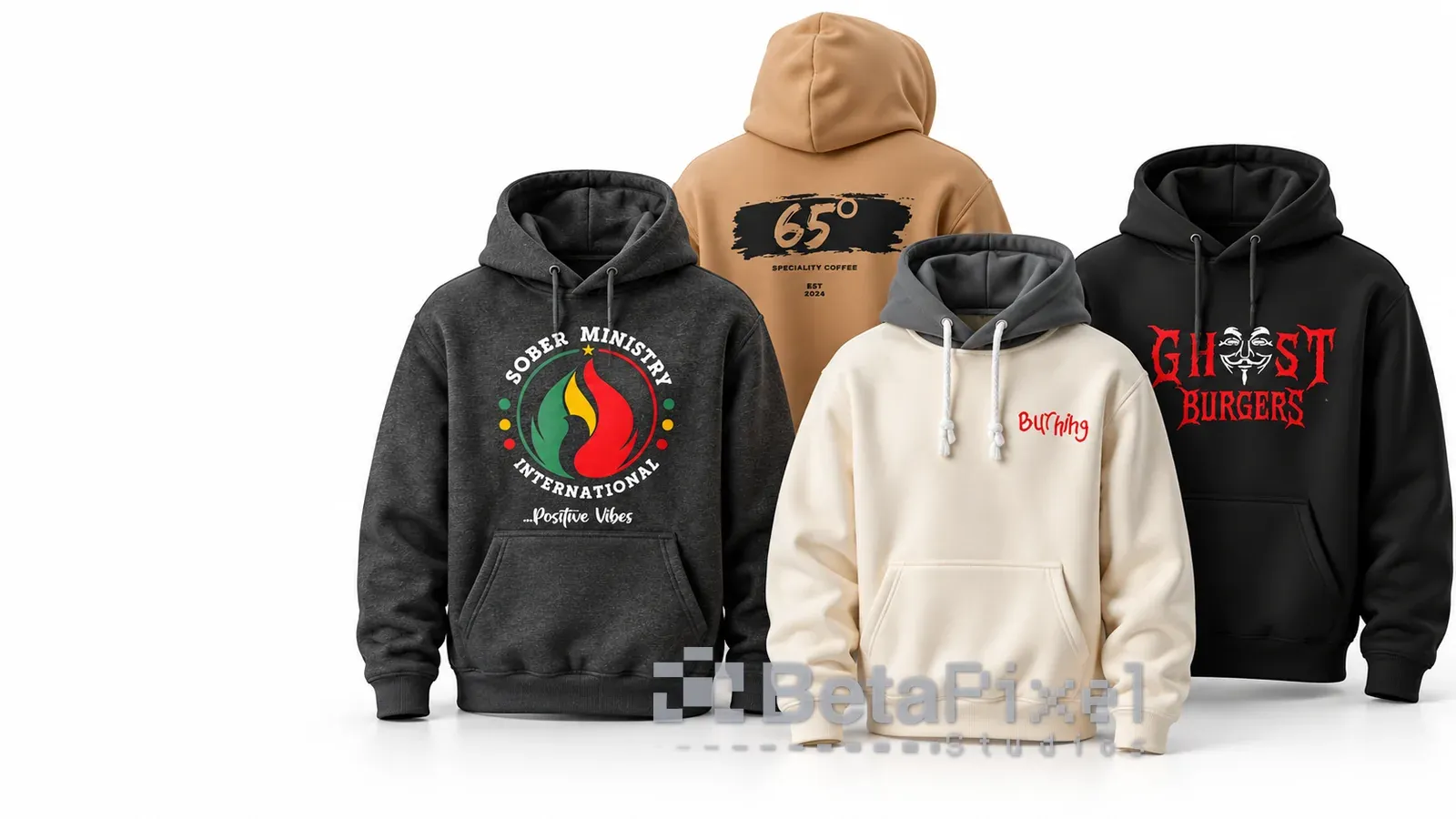
Most branding jobs in Nairobi can be printed more than one way, and the method you choose decides the price, the minimum order and how long the print lasts. This guide compares the five methods you are most likely to be offered, and gives a straight rule for when to use each.
The Short Version
- Hard item, full colour, any quantity: UV DTF (magic stickers).
- Clothing, full colour, small to medium run: DTF.
- White polyester or white coated mugs, maximum durability: sublimation.
- Clothing, one to three colours, 50+ identical pieces: screen printing.
- Pens and small curved items, one colour, hundreds of pieces: pad printing.
Side-by-Side Comparison
| Method | Surfaces | Colours | Minimum order | Setup cost | Durability |
|---|---|---|---|---|---|
| UV DTF | Hard: glass, metal, plastics, acrylic, ceramic, sealed wood | Full colour + white + varnish | 0.5 m of film (58 × 50 cm) | None | Good; hand wash |
| DTF | Fabric: cotton, polyester, blends | Full colour + white | 1 | None | Good; wash inside out at 30–40°C |
| Sublimation | White/light polyester, coated mugs and panels | Full colour, no white | 1 | Low (coated blanks) | Excellent |
| Screen printing | Fabric, paper, flat rigid sheets | Usually 1–6 spot colours | ~50 | One screen per colour | Excellent |
| Pad printing | Small curved items: pens, lighters, flash drives | Usually 1–2 spot colours | ~100 | One plate per colour | Good |
UV DTF
The design is printed with UV-cured ink onto an adhesive film, laminated with a clear top film, and applied by pressing it onto the item and peeling the film away. Only the ink stays behind.
Strengths: no setup, and a half-metre minimum sheet (58 × 50 cm) can carry many different designs; full colour including white on dark and clear surfaces; works on almost any hard, smooth material; applied without heat.
Limits: not for fabric; not ideal for daily dishwasher use; large designs over about A4 are hard to apply without trapped air.
Use it for: branded bottles, tumblers, glassware, laptops, awards, packaging. Details on our UV DTF magic stickers page, and a plain explanation in what are magic stickers.
DTF (Direct-to-Film, for Garments)
The design is printed onto PET film with water-based ink and a white underbase, coated with adhesive powder, and heat-pressed onto the garment.
Strengths: any number of colours at the same price; photographs and gradients print well; works on cotton, polyester and blends, light or dark; one-off shirts and mixed sizes are cheap to set up.
Limits: a large solid print has a slight feel on the fabric; it needs sensible wash care; on long runs of a simple design, screen printing becomes cheaper.
Use it for: staff shirts, event t-shirts, hoodies, tote bags, small clothing brand runs. See t-shirt printing in Nairobi.
Sublimation
Special ink is printed onto paper, then heat turns it into a gas that bonds into polyester fibres or a polymer coating. The print becomes part of the material.
Strengths: extremely durable — it cannot crack or peel; no feel on fabric; vivid colour; dishwasher-tolerant on coated mugs.
Limits: works only on polyester or polymer-coated items; only on white or very light backgrounds, because sublimation has no white ink; cotton cannot be sublimated.
Use it for: white ceramic mugs, sports jerseys in polyester, photo panels, lanyards.
Screen Printing
Ink is pushed through a fine mesh screen, one screen per colour, onto the item. Each colour is printed separately.
Strengths: the most durable print on garments; the lowest cost per piece on long runs; strong, opaque spot colours, including metallics and specialist inks.
Limits: each colour needs its own screen, so setup cost rises with colour count; photographs and gradients need halftoning; not economical for small runs or personalised items.
Use it for: 100 identical two-colour event shirts, bulk tote bags, paper posters in spot colours.
Pad Printing
A silicone pad picks up ink from an etched plate and presses it onto the item. The soft pad wraps around curves.
Strengths: prints on small, curved and textured items other methods cannot reach; very cheap per piece on large runs.
Limits: one plate per colour, so best for one- or two-colour logos; small print areas only; setup makes short runs expensive.
Use it for: pens, keyholders, flash drives, lighters in quantities of hundreds or more.
Questions to Ask Before Choosing
- What is the surface? Hard, fabric, coated or polyester? This alone rules out most methods.
- How many colours in the design? Full-colour logos point to UV DTF, DTF or sublimation.
- How many pieces, and are they identical? Under 50, or personalised with names, favours the no-setup methods.
- How will the item be used and washed? Daily dishwasher or heavy washing points to sublimation or screen.
If you are unsure, send a photo of the item and your logo. We will recommend a method and say which ones will not work. For corporate gifts specifically, read how to brand water bottles for corporate gifting.