

Knowledge Centre · UV DTF
UV DTF Stickers vs Clear Stickers: Which Should You Choose?
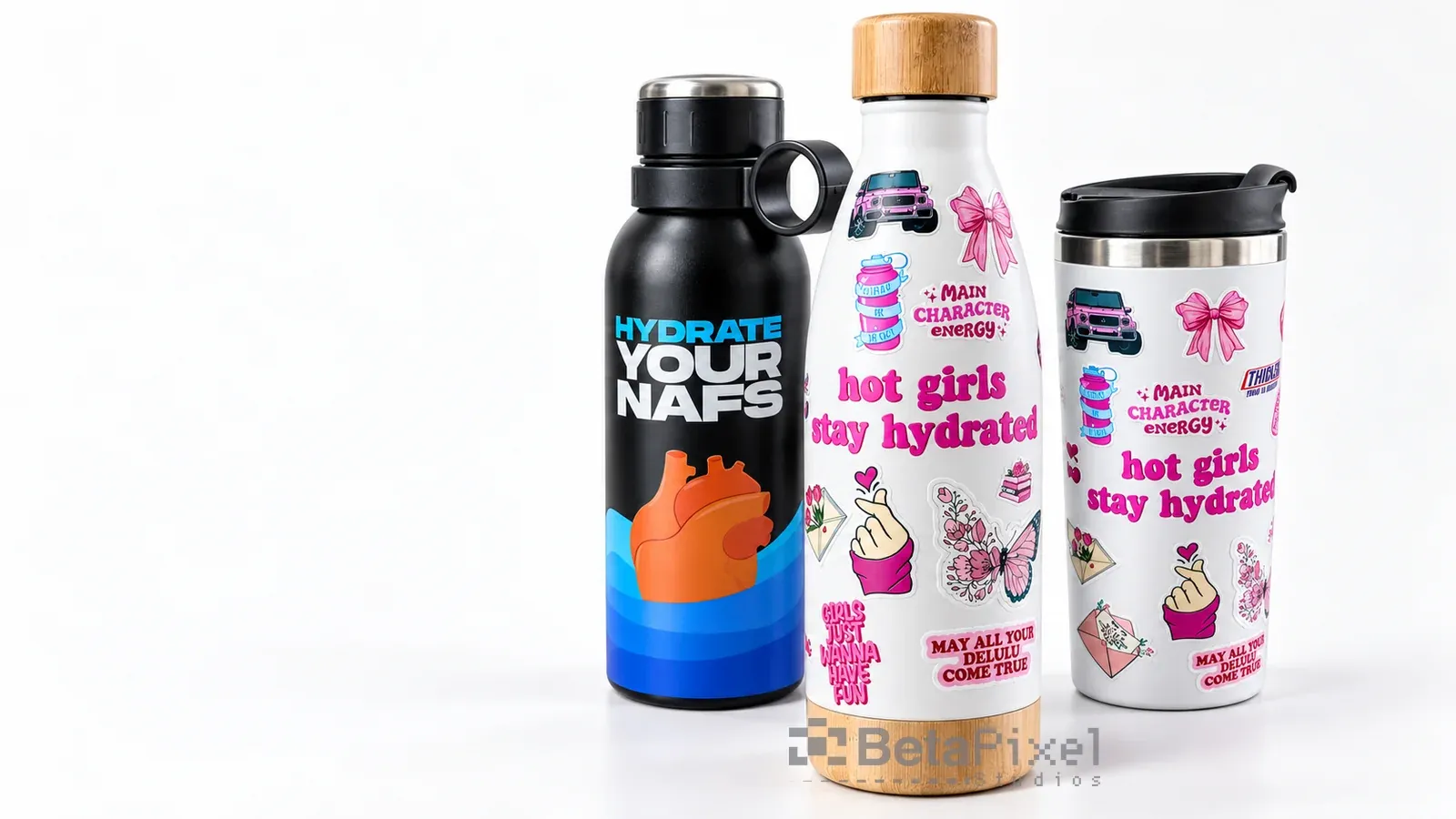
Both options promise the same thing: your logo on a bottle, jar, glass or laptop without a white box around it. They get there in very different ways, and the difference shows up in how the finished item looks, how long the branding lasts and how quickly the stickers go on. This guide explains both so you can pick the right one for your product.
The Short Version
- You want the design to look printed on the item, with no visible edge: UV DTF stickers (magic stickers).
- You are labelling hundreds or thousands of jars or bottles, fast: clear stickers, supplied on rolls or sheets.
- The item is dark or clear and the colours must stay bright: UV DTF, because it prints a solid white layer under the colour.
- The branding needs to come off later, such as a promotion or an event: clear stickers with a removable adhesive.
- You need a few pieces in different designs: UV DTF, as there is no cutting setup and one half-metre sheet (58 × 50 cm) carries many designs.
How Each One Is Made
A clear sticker is printed onto a transparent film, usually clear vinyl, and often covered with a thin laminate to protect the print. It is then cut to shape. When you apply it, the whole film stays on the item: the printed design plus the clear area around it.
A UV DTF sticker, which Kenyan buyers call a magic sticker, is printed with UV-cured ink onto a carrier film, layered as white, colour and a clear gloss varnish. You press it onto the item, rub it down and peel the carrier away. Only the ink stays behind, so there is no film and no edge. If this is new to you, start with what are magic stickers.
Side-by-Side Comparison
| UV DTF sticker | Clear sticker | |
|---|---|---|
| What stays on the item | Ink only | Printed film, including clear margins |
| Visible edge | None | A thin edge that catches light and can collect dirt |
| Colour on dark or clear surfaces | Bright, thanks to a solid white layer | Can look faded unless white ink is printed underneath |
| Feel | Slightly raised, glossy, textured | Flat and smooth |
| Shapes | Any shape, including separate letters with nothing between them | Needs a cut line; loose letters are hard to apply |
| Minimum order | Half a metre of film (58 × 50 cm), many designs per sheet | Usually economical from a few hundred |
| Application speed | Press, rub and peel: a few seconds more per piece | Peel and stick; rolls can go on a labelling machine |
| Removal | Hard to remove cleanly once cured | Can be made removable |
| Best surfaces | Hard and smooth: glass, metal, plastic, acrylic, ceramic, sealed wood | Smooth surfaces, including packaging film and paper-based packs |
How They Look on the Product
This is where most buyers decide. On a glass bottle or a steel tumbler, a clear sticker is visible from an angle: you can see the rectangle of film around the logo, especially once dust or hand oil collects on the edge. A UV DTF transfer has nothing around the design, so a logo made of separate letters reads as if it was printed on the item. The raised gloss finish also gives it a slightly premium feel that customers notice when they pick the product up.
Clear stickers look their best on flat, even surfaces where the film sits completely flat, such as a straight-sided jar or a smooth box. They can also be reverse printed for the inside of a shop window, which UV DTF is not made for.
Durability and Care
Both are water resistant and both survive normal handling, fridges and hand washing. Neither is designed for daily dishwasher cycles.
The weak point of a clear sticker is its edge. Over time, and especially on curved or frequently handled items, edges can lift and pick up dirt. The weak point of UV DTF is a poorly prepared surface: if the item is greasy, textured or silicone-coated, the ink will not bond. Clean the surface with alcohol and follow our UV DTF application guide and a magic sticker will outlast most clear stickers on the same item.
Cost and Quantity
We quote every job individually, so here are the factors rather than prices.
UV DTF is priced mainly by the area of film printed. The minimum order is half a metre (58 × 50 cm) and a full metre is 58 × 100 cm; either sheet can carry many different designs at once, so small logos stay economical. That suits personalised gifts, mixed designs and short runs. More detail is in how much magic stickers cost in Kenya.
Clear stickers have a cutting setup, then become very cheap per piece as quantity rises, and they are quicker to apply. For a product line where every jar gets the same label, clear or white labels on rolls are usually the sensible choice. Our packaging and product labels page covers label materials and finishes.
Which One for Which Job
| Job | Our recommendation |
|---|---|
| Branded water bottles, tumblers and mugs for corporate gifts | UV DTF |
| Perfume, cosmetic and candle containers with a no-label look | UV DTF for small runs; clear labels for large runs |
| Honey, sauce and juice jars on a production line | Clear or white labels on rolls |
| Laptop, phone and tablet branding | UV DTF |
| Shop window and glass door graphics | Clear or reverse-printed window vinyl |
| Event and promotion stickers that must come off later | Clear stickers with removable adhesive |
| Awards, acrylic plaques and signage accents | UV DTF |
Questions to Ask Before You Order
- What is the surface, and is it smooth? Rough, textured or silicone surfaces suit neither well.
- Is the item dark or clear? If so, make sure white ink is part of the specification.
- How many pieces, and is every design the same? Few or mixed designs point to UV DTF; long identical runs point to clear labels.
- Who applies them, and how fast? A labelling line favours clear stickers on rolls.
- Should the branding be permanent? If it must come off, choose a removable clear sticker.
Still unsure? Send a photo of the item and your logo through request a quote or WhatsApp, and we will tell you which option will look better on it and which one will not work. Our UV DTF stickers page shows finished examples on bottles, notebooks and tumblers.